


Classical Music – What Is It Anyway?
Classical music…we all recognize it when we hear it, don’t we? Or do we? Can you define classical music? Don’t worry, even experts and reference books have not come to a consensus, but that is all the more reason for each of us to have a general framework for understanding this beautiful and exciting form of music.
I think the best way to start this new monthly column is to discuss definitions of classical music to open our eyes so we can see this genre of music as something that is approachable and meaningful to the 21st-century listener. Future columns will be focused on interesting (non-academic, non-technical) aspects of classical music – some funny, some weird, all thought-provoking — and the composers, musicians, conductors, and others who make it all happen so that it will pique the interest of music lovers, of the classical music curious, and of a general audience. There will be no music theory and nothing that requires a music education or background; the only requirements are an open mind and heart and the ability to smile, laugh, think, and appreciate.
Before we get to what two august reference books say about the definition of classical music, let’s explore the notion of “classic”. According to author Michael DeSapio, a classic is “a work that has been cherished and revered as essential to human knowledge and has been passed down through time as an essential heritage.” So far, so good.
The Oxford Learner’s Dictionary states that classical music can be defined as “Music written in a Western musical tradition that generally uses an established form, such as a symphony. Classical music generally is considered to be serious and to have a lasting value.”
Hmmmm. Professor of Music Ernie Green of Washington College does not totally agree with the part that says that classical music generally is considered to be serious.
“I think we have to figure out what we mean by serious”, Professor Green explains. “Do we mean that it’s serious, as in it is artfully conceived and executed? Or do we mean it’s serious, as in not playful or whimsical? And I think that the first definition is probably what we mean. And I think that’s the beauty of what we think of as classical music. There is so much opportunity for expression and for using form, structure, harmony, rhythm, melody — all those elements — and using them in creative ways to create something new and special.”
I am so glad that Professor Green and I agree that there is an abundance of classical music that may in some cases be whimsical, mischievous, and yes – even frivolous!
When it comes to the Cambridge English Dictionary’s definition of classical music as “Music that is considered to be part of a long, formal tradition and that is considered to have lasting value”, Jeffrey Schoyen, Professor of Music and Conductor of the Salisbury Symphony thinks it is close to the mark, but he delves a little deeper into what will provide lasting quality to a work of classical music so that it becomes part of the musical canon and becomes accepted and enduring.
“I think of what [composer and conductor Leonard] Bernstein said about emotions being so important in classical music”, Professor Schoyen told me. “He [Bernstein] said, ‘Emotions will make the music last. People will want to keep hearing it, and that will give it a lasting quality.’”
And what of music that is being composed now — in the 21st century? Where is classical music coming from today, and will it last into the future? Will there even be a future for classical music? I posed that question to Professor Emeritus Linda Cockey of Salisbury University.
“Well, I certainly hope so, and I know, Muphen, you hope so, too,” Professor Cockey replied. “People today are brought into classical music, I believe, in so many new ways: through film music, through video games, through YouTube, and there are many diverse styles to share such as live performances not just in a concert hall, but in so many new types of venues. And we’re bringing back past popular pieces for a new generation to discover as well as developing new music, especially with the use of modern technology.”
Hear that, GenZers? That is classical music you are hearing on Final Fantasy VII. So come along with us for a great ride!
See what I mean about there is no consensus for a simple definition of classical music? But the most important thing is how it affects us. The future of classical music will add further dimension and depth to the definition. New forms of classical music, new outlets for presenting classical music, and an evolving audience all will have an effect on how the definition of classical music will mature over the coming decades and centuries.
In the end, the definition of classical music is what it means to each one of us individually. It’s what we enjoy as part of a concert; it is a study companion, or it is our fellow passenger on a car ride; it is the background for a romantic encounter; or it is what we turn to for comfort, excitement, or novelty. Whatever your definition is I hope, through these columns, to bring you interesting, weird, funny, somber, and thoughtful discussions about the music that speaks to my brain, my soul, and my funny bone. Let’s share the adventure!
Yours for great (classical) music!
Coming in August: My Favorite Composer Was a Jailbird
Coming in September: The Eras of Classical Music
You Might Also Like:

FEATURED PARTNER
Waterfowl Festival
55th Waterfowl Festival is November 13-15, 2026, in Easton, Talbot County. Discover the best of local wildlife, nature, art, heritage, food, and FUN at the annual Waterfowl Festival. Over a dozen venues spread throughout the town entice and engage visitors to explore the area and be a part of a tradition that has been going strong for generations.
Info

FEATURED PARTNER
Pints for Paws 2026 - Caroline County Humane Society
CCHS Pints for Paw! In addition to craft beverage tastings, attendees can browse local artisan vendors while listening to live music, enjoy delicious food from local vendors, purchase raffle tickets for exciting prizes, and learn more about the Caroline County Humane Society.
Info
FEATURED PARTNER
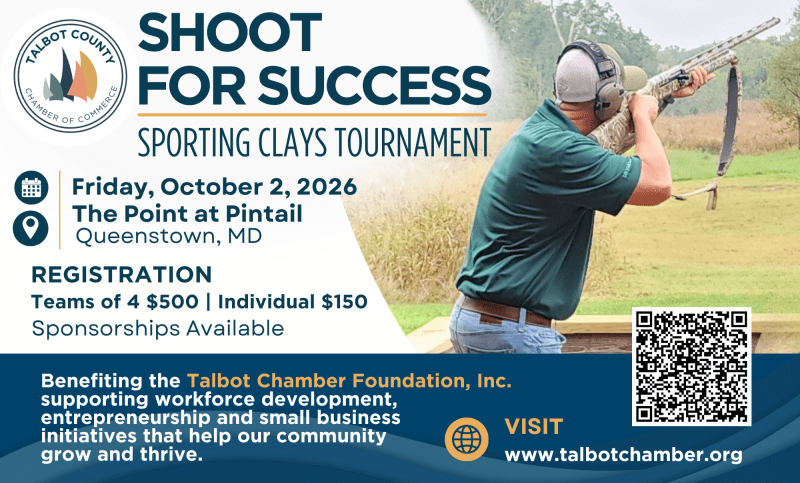
SHOOT FOR SUCCESS - Chamber Sporting Clay Tournament
Join the Talbot County Chamber on Oct. 2, 2026, at The Point at Pintail for annual Shoot for Success Sporting Clays Tournament. Proceeds benefit the Talbot Chamber Foundation, Inc., initiatives that help strengthen the business community and talent pipeline.
Info
SHARE
PRINT