


Yes, It Is True … My Favorite Composer Was A Jailbird!
Ah, Bach! Johann Sebastian, that is. I need to be specific because Bach had many offspring (20), several of whom (4)* also were composers of note (notes???). In my opinion J.S. Bach was the most wondrous composer ever put on this earth. He lived and composed in the Baroque Era of classical music: he was born in 1685 and he died in 1750 – the year that generally is regarded as the final year of the Baroque Era (which lasted from about 1600 to 1750).
Bach, like other composers of his time, made his living primarily writing music for the Church and for aristocratic patrons. It was said of Bach during his life that “Other composers write for the Church, Bach writes for God.”
That sentiment is very evident in the more than a thousand musical compositions Bach wrote. His wide-ranging works included every type of music of his Era (except he did not write an opera). A catalog of his work includes sacred and secular cantatas**; many other types of vocal works; various types of church music; a vast number of works for organ and for keyboard; and many, many pieces of glorious orchestral and chamber music.
Now, Bach’s role as a musician and composer in the employ of the church or the aristocracy put him, technically, in the servant class. In other words, he was expected to be subservient to the wishes of his employer and to have little or no recourse to deny his employer’s wishes….regardless of how unjust those wishes seemed to him.
So J.S. Bach spent 30 days in prison in 1717 for trying to get out of his contract with Wilhelm Ernst, Prince of Weimar because Bach wanted to accept a new position elsewhere. He had been denied the position of Director of Music at his current post when the incumbent died and the position was given to the deceased Director of Music’s son. Bach was frustrated, but then he was pleased to be offered the Director of Music position with a rival Court. But Wilhelm Ernst, Prince of Weimar would not accept Bach’s resignation and instead had him thrown in jail for the offense of “Too stubbornly forcing the issue of his dismissal.”
Bach refused to be bullied; he settled down in jail – somewhat happily it seems –
and, without a musical instrument, he began to write more than 40 pieces of music including some preludes for organ that were published as his first organ masterwork. Eventually his adversary realized that Bach would not give in and Bach was released.
* — Bach’s four composer sons were Wilhelm Friedemann (1710–1784), Carl Philipp Emanuel (1714–1788), Johann Christoph Friedrich (1732–1795), and Johann Christian (1735–1782).
** — A cantata is a choral composition (from Italian cantare, “to sing”) that was invented in Italy in the 17th century. It is a piece of music written for voice (soloist(s) and/or choir) and various instruments.
<><><><><><><><><><><><><><>
–1–
Now, lest you think J.S. Bach was the only jailbird among well-known composers, let’s take a brief look at what befell Ludwig Van Beethoven (another of classical music’s “Three Bs” – Bach, Beethoven, and Brahms) one balmy evening in Germany in 1820.
Ludwig van Beethoven, who was born in 1770 and died in 1827, was a composer of the Classical Era – generally considered to be from 1750 to 1830. Beethoven led a mostly messy and slovenly life that resulted in a case of mistaken identity that landed the magnificent music maker in a very ignominious position indeed. The great composer constantly was so absorbed in his work that he paid no attention to cleanliness, or neatness, or grooming. One day he went for a walk and before long had no idea where he was. So he began looking in windows hoping to find someone to give him directions. Well, this is not considered exactly civilized behavior; the police thought this scruffy and dirty person was just an ordinary tramp. So Beethoven was arrested and imprisoned briefly on a charge of vagrancy.
“I am Beethoven!” the composer told the polizei who responded, “Of course you are”.
It should be noted that Beethoven – unlike J.S. Bach — was not a model prisoner: the prison staff needed help in dealing with the enraged composer. They appealed to the police commissioner, telling him, “Herr Commissioner, we have arrested a man who gives us no rest and yells all the time that he is Beethoven.” Fortunately the Commissioner thought it might be Beethoven, so he summoned the city’s musical director who identified the irate composer and bailed him out before he could start a prison riot.
See, GenZers: Classical music has its bad boys, too!
Ah, yes, classical music: that glorious stuff composed by the genteel for the genteel. Or not? Well, the music certainly is glorious, in my humble opinion. The genteel? Perhaps not so much!
<><><><><><><><><><><><><><><><><><><><><><>
Two things (of interest?): First, I am working on developing a Web site so that I can include links to relevant music in these columns. Stay tuned. Second thing: Do you have a question or comment for me? I would love to hear from you. Questions will be answered in the October column. Please EMail me at info@attractionmag.com. Please put MRW in the Subject Line, and please let me know if you want to remain anonymous. I can’t wait to hear from you!
<><><><><><><><><><><><><><><><><><><><>
Coming in September: The Eras of Classical Music
Coming in October: Your Questions Answered
Coming in November: The (Late) Queen’s Music
Coming in December: Let’s Go on a Sleigh Ride!
You Might Also Like:

FEATURED PARTNER
Pints for Paws 2026 - Caroline County Humane Society
CCHS Pints for Paw! In addition to craft beverage tastings, attendees can browse local artisan vendors while listening to live music, enjoy delicious food from local vendors, purchase raffle tickets for exciting prizes, and learn more about the Caroline County Humane Society.
Info
FEATURED PARTNER
Waterfowl Festival
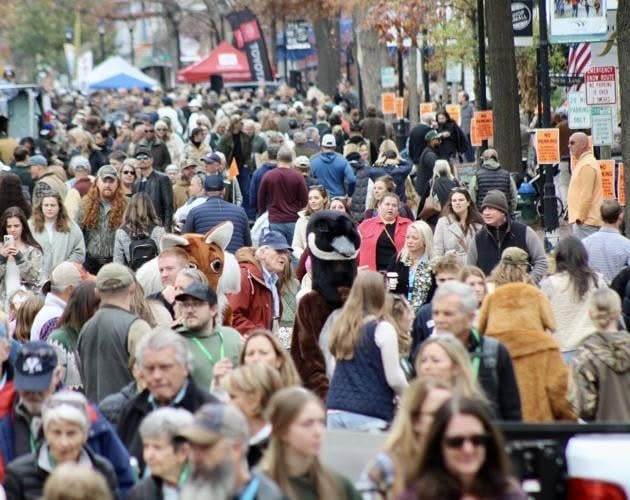
55th Waterfowl Festival is November 13-15, 2026, in Easton, Talbot County. Discover the best of local wildlife, nature, art, heritage, food, and FUN at the annual Waterfowl Festival. Over a dozen venues spread throughout the town entice and engage visitors to explore the area and be a part of a tradition that has been going strong for generations.
Info
FEATURED PARTNER
Attraction Magazine: THE OFFICIAL GUIDE FOR WATERFOWL FESTIVAL
The guide will be available to an anticipated 35,000 attendees during the 3-day event, November 13-15, 2026.
Deadline for final ads and content is October 5, 2026
For rates and information, contact Debbie via email at debbie@attractionmag.com
Info
SHARE
PRINT