



Oxford Kids Camp to Sail on a Skipjack
Cathy Schmidt
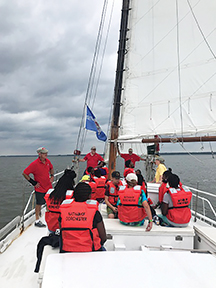
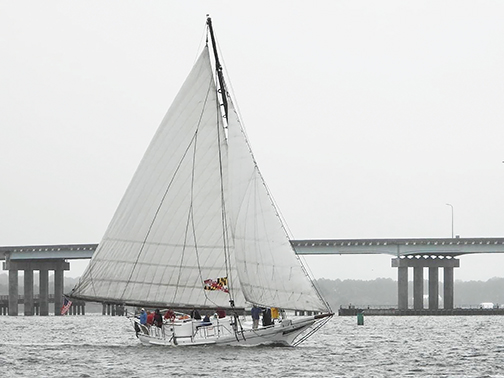
The Nathan of Dorchester plans to visit Oxford on Wednesday June 24th, to share with the Oxford Kids Camp the history of the skipjack and what it was like to live aboard one. The boat will be visiting the first week of camp where the theme is, “Maritime History and Mystery.” In addition to a joyful, educational ride, the children will also learn about oysters and their importance to the Chesapeake Bay. Between sails, there are plans to have dredging demos from the dock.
The latter half of the 19th century was a boom time for oyster harvesting in the Chesapeake. A record 15,000,000 bushels were harvested in 1884 and by 1900 more than 2000 oyster dredge boats were reported to have been working in the bay; and possibly half of them were skipjacks. The skipjack evolved in the 1880’s as oysters were harvested from increasingly shallow beds. According to the book, “God, Man, Salt Water and the Eastern Shore,” by William Tawes, the skipjack was “named after a variety of fish which would leap out of the water and skip rapidly over the waves, sometimes jumping in an open boat while she is close hauled with her washboards awash.
”Both Talbot and Dorchester Counties were major boat building counties, with most skipjacks built by waterman themselves in their own backyards. However, Curtis Applegarth, owner of Applegarth’s boatyard in Oxford, built skipjacks. As you come into Oxford and take a sweeping right turn at the causeway, the iconic red shed from his original yard still stands.
In a 1977 Star Democrat interview, Applegarth at age 68 then, was quoted as saying, “Skipjacks are strictly a Chesapeake Bay boat and the original name for skipjack was a bateau… flat bottom boat,” he said, “although the hull was later rounded to make the boats more maneuverable.” Mr. Applegarth built them with every detail to a regular Bay skipjack like they were in 1900. It was in January of 1977 when the third-generation wooden boat builder said, “When it comes to skipjacks these days there’s no one else building. They’re like my children, he says of the boats, and many of them are kept at his docks in the winter for storage and maintenance.”
Curtis Applegarth may have built the last skipjack in Oxford, but over in Dorchester County in 1994, Bobby Ruark, master shipwright and retired watermen, found himself building one last skipjack, “The Nathan of Dorchester.” Many of the Nathan’s metal parts came from other skipjacks carrying on the tradition of salvaging what can be put to use. The “Nathan” has winders and rigging blocks from the Nelly Byrd, built in 1911. Davits and dredge rollers came from Susan May (1901). The windless came from the Clarance Crocket, built at Deep Creek Virginia in 1908, and the wheel and gearbox came from the Wilma Lee built in Wingate Maryland in 1940. (Nathan History, Docent Book)
A working skipjack crew consists of a captain and four or five crew including the all-important cook. The captain and cook slept in the cabin with the other crew sleeping in the forepeak. A wood or coal-fueled stove provided hot meals of high calorie-easily prepared food such as soups, fried foods, coffee, molasses and beans. Payment was by shares with the food bill taken off the top. One share went to the boat for maintenance and upkeep, one to the captain, and one share was divided among the crew. Life on a skipjack was hard at best.
In 1991 the Dorchester Skipjack Committee was formed to preserve the culture and history of waterman and ship builders of the community. The Nathan was designed by marine architect Harold Ruark and built by volunteers under the guidance of Master Shipwright Bobby Ruark. Scarce old growth pines in Dorchester County provided the trees for the keelson, mast and boom. It was constructed at Generation III Marina, at the head of Cambridge Creek from 1992 to 1994. 10,000 man hours went into building the Nathan.
The Dorchester Skipjack Committee owns, preserves, and operates the skipjack “Nathan of Dorchester” so as to promote Cambridge and Dorchester County Maritime Heritage based on tourism, by offering educational on the water experiences on a historically maintained boat. (Nathan Docent Book)
You Might Also Like:
FEATURED PARTNER
Waterfowl Festival
55th Waterfowl Festival is November 13-15, 2026, in Easton, Talbot County. Discover the best of local wildlife, nature, art, heritage, food, and FUN at the annual Waterfowl Festival. Over a dozen venues spread throughout the town entice and engage visitors to explore the area and be a part of a tradition that has been going strong for generations.
Info
FEATURED PARTNER
Attraction Magazine: THE OFFICIAL GUIDE FOR WATERFOWL FESTIVAL
The guide will be available to an anticipated 35,000 attendees during the 3-day event, November 13-15, 2026.
Deadline for final ads and content is October 5, 2026
For rates and information, contact Debbie via email at debbie@attractionmag.com
Info

FEATURED PARTNER
SHOOT FOR SUCCESS - Chamber Sporting Clay Tournament
Join the Talbot County Chamber on Oct. 2, 2026, at The Point at Pintail for annual Shoot for Success Sporting Clays Tournament. Proceeds benefit the Talbot Chamber Foundation, Inc., initiatives that help strengthen the business community and talent pipeline.
Info
SHARE
PRINT