



Oxford Vignettes – Memories of the Oxford Train
Cathy Schmidt
The train to Oxford, now a memory for only a few, looms large in Betsy Thompson Willey’s childhood tales of growing up in Oxford. Not only did Betsy ride the train, she also was the great-granddaughter of the conductor, Mr. John S. Morris.
Her enthusiasm for her train rides filled the room as we spoke recently at her home in Easton. Her infectious smile and energy as she shared her story had me on the train ride too, sitting on the seat and looking out the window with her.
Imagine being 8 years old and sitting by the train window as it left Oxford knowing that your great-grandaddy was the conductor – what pride, what joy! Her parents, John and Ethel Thompson, on occasion would take her to the Oxford train station, located at Pier Street, and she would climb aboard the 2 car passenger train, and sit at a window seat. The seats were wide and made for two but she had the padded seat all to herself, where her great-grandfather kept an eye on her. She saw mostly woods between Oxford and the next train stop, Trappe, right off of Oxford Rd. Her parents would pick her up at Trappe station and bring her home, but on rare occasions, they let her ride all the way to Easton.
On the ride to Easton the train went over Trippe Creek and then over Peachblossom Creek on trestles not far from the bridges that were built for Oxford road. The trestles still remain. The train crossed over a section of the Easton by-pass, and just down the street from where Betsy lives now, a large concrete abutment, once used to bridge the tracks across the very head of the Tred Avon, also remains.
The track line then picks up on “Rails to Trails,” as it intersects with Wayside Avenue. The rail line shoots like a straight arrow through Easton, with the old Easton Railroad Station the next stop. Facing Pennsylvania Avenue, there’s no doubt the street was named for the rail company that owned the line at the time of its demise in 1957 – The Pennsylvania Railroad Company.
In the 1930’s a gasoline engine passenger train was introduced just for “quick” trips to Wilmington, Delaware. This special train was called the “Bullet Train,” and the trip took about 4 hours, which in those days felt like a miracle. Once cars became more widely used, travelers using the train dwindled and passenger trains to various destinations from Oxford stopped in 1949; and the freight train was discontinued in 1957.
Workers that built the original railroad line that stretched from Oxford to Easton to Clayton, Delaware began grading the line in 1865. It would be 1871 before the tracks made it to the Oxford waterfront at Pier Street. The Maryland and Delaware Railroad Company who laid the rail was largely financed by Talbot capital and headed by Talbot men. General Tench Tilghman who lived at Plimhimmon was President of the Maryland and Delaware Railroad Company for many years and sank much of his own money into the endeavor. (Preston, pg. 230)
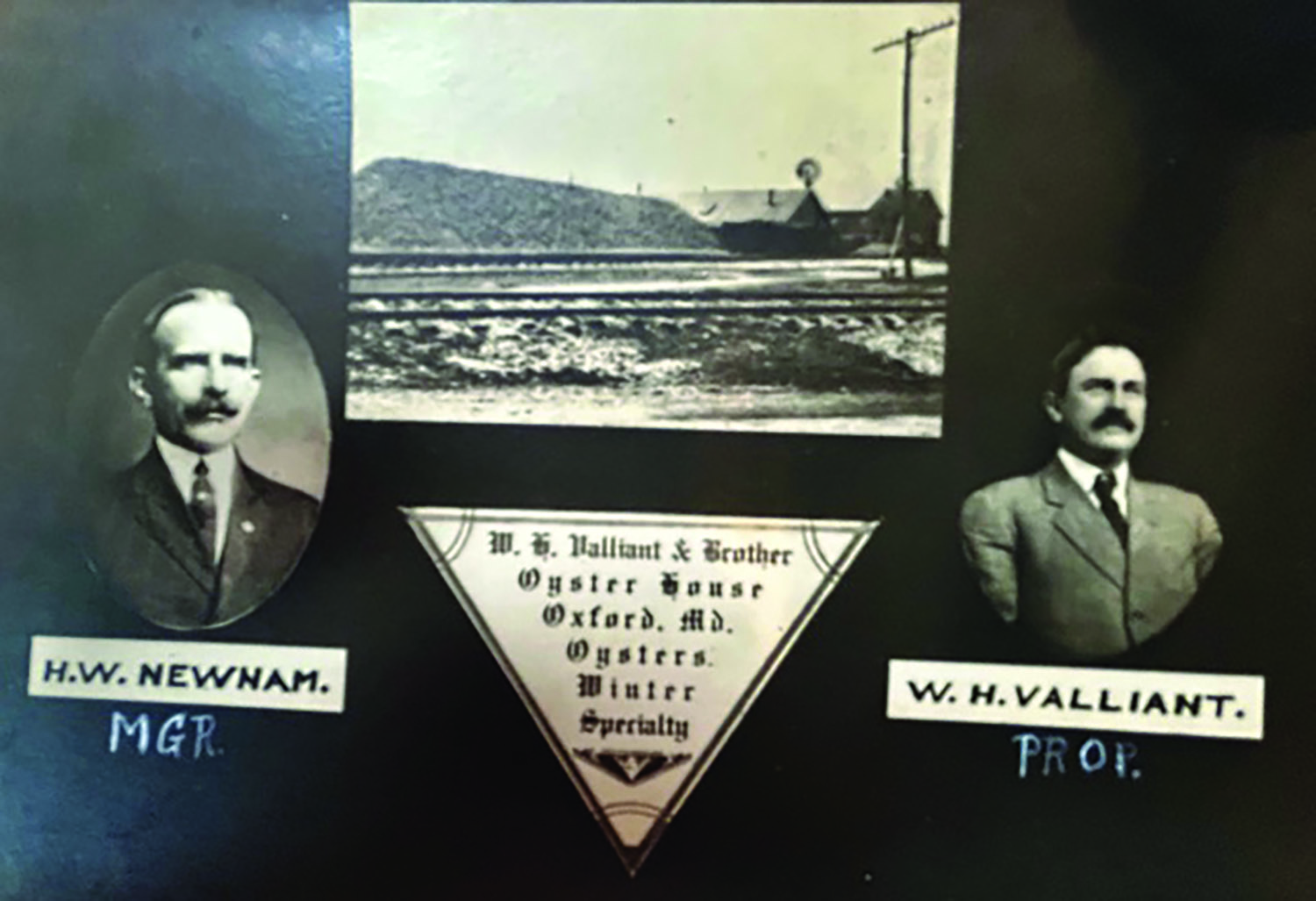
The railroad brought prosperity to the town of Oxford because now, oysters, seafood and produce could be shipped quickly and efficiently to larger cities, sometimes fetching a better price. Because of this, new businesses sprung up everywhere. Especially oyster shucking plants. One such business was the William H. Valliant and Brother Oyster House which was managed by my great-grandfather Howard Newnam.
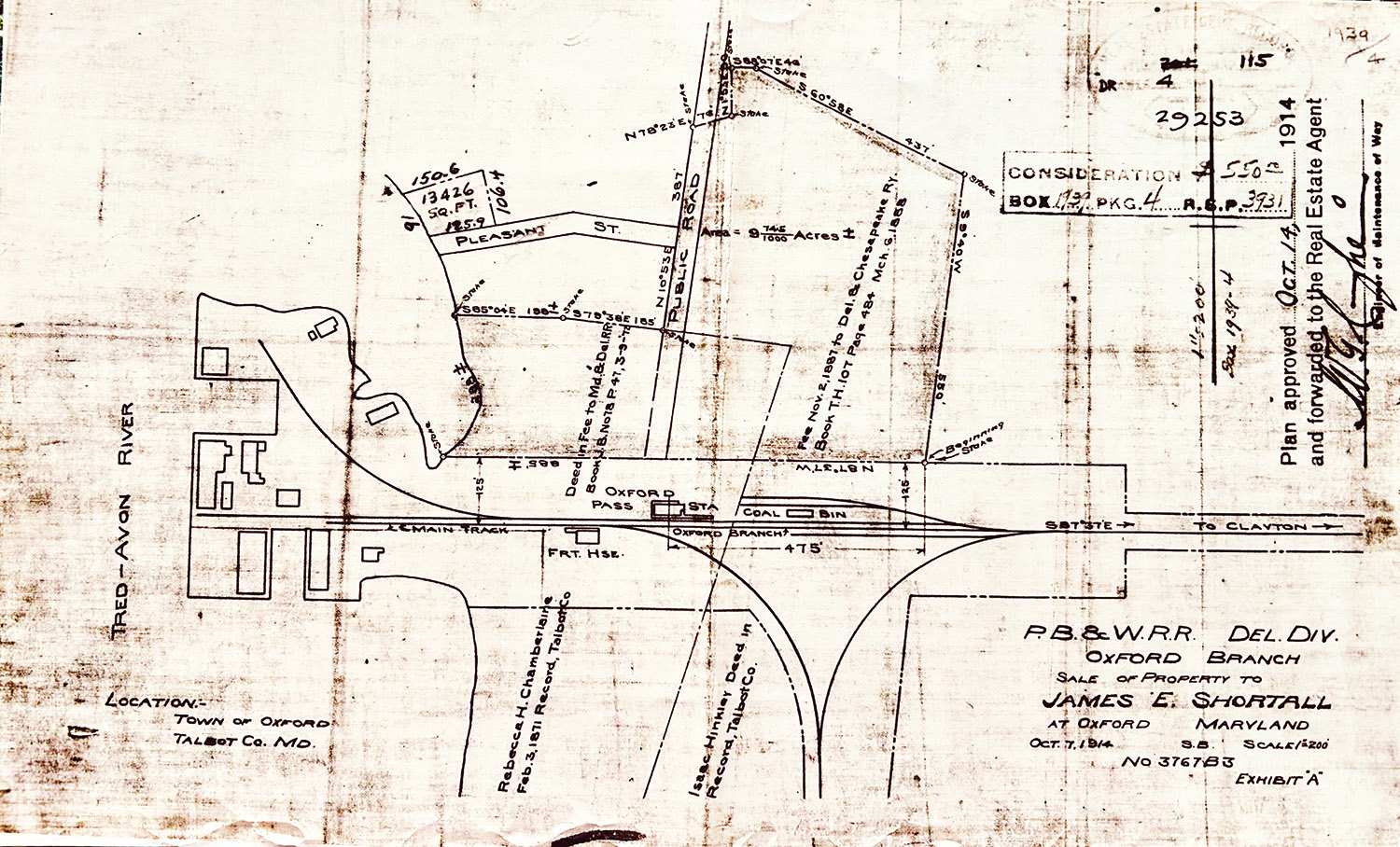
A 1914 map of the Oxford Railroad area at Pier Street, sometimes called “The Oxford Branch,” shows some interesting items. A coal bin for the steam engine, the station, the freight house, and the “Y.” The Y is how the train turned itself around from its dead end waterfront destination. The map also shows many businesses, mostly seafood plants selling oysters.
Betsy shared a few other memories of the railroad tracks. She and her brother would go and pick wild asparagus that grew near the tracks behind the school. She’d bring it home but not tell her mother where she picked it because she wasn’t allowed near the tracks. Another time she told her dad that she wanted to go hunting. So he took her out to the railroad tracks to learn how to shoot a gun. It was very cold that day and after some target shooting she decided she didn’t like it much and so she never took up hunting.
There are not too many people left with us that rode the Oxford train.
My mother, Nancy Newnam Newton also rode the train as a young girl. She told me she rode it to Easton to buy a present for her grandmother Ida May Newnam. She came back with a small bubbled milk glass lamp. Bob Valliant, who grew up in Oxford remembers a “train ride birthday party” for his cousin Suzanne (Hanks) Litty “I imagine, my sister Elaine (Cox) and my cousin Doug Hanks Jr. were there too, but that’s about all I remember because I was so young.” Janice Haddaway’s father shipped crabs on the train to Baltimore, and she remembers going on a field trip to the train. Her teacher made them all hold onto a rope and walked them down to the train station and they got a tour of the train. Leo Nollmeyer remembers a railroad express truck in the 1950’s that picked up freight. He shared with me, “We shipped oysters to the mid-west using that service for several years before they stopped it.”
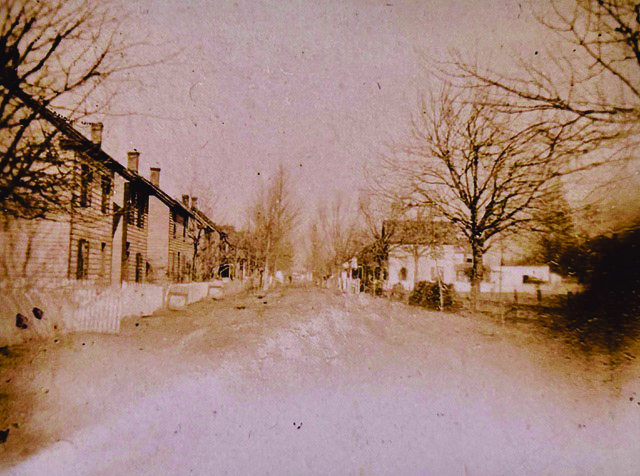
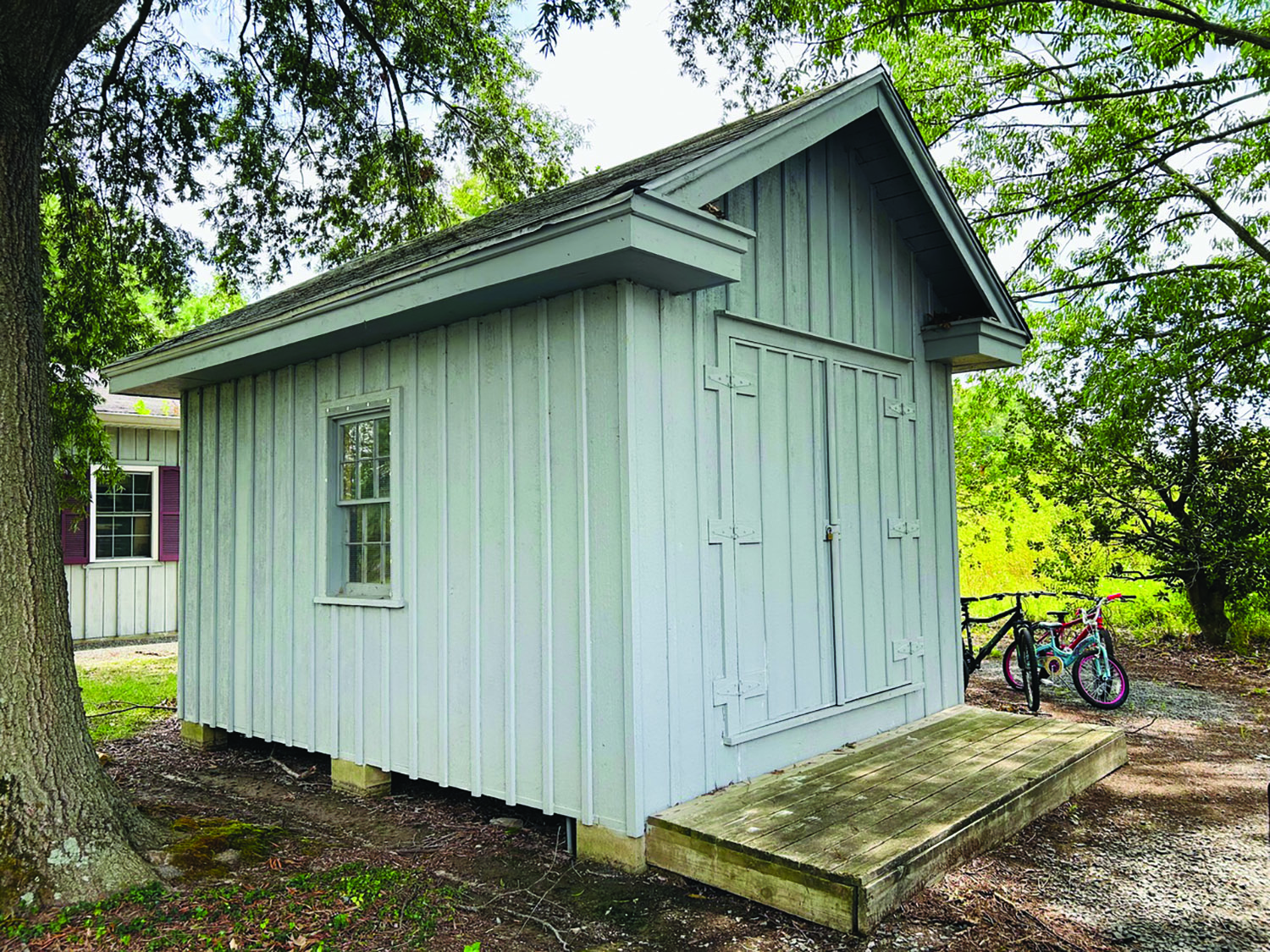
With the tracks all torn up and the businesses of the early to mid 20th century gone, it’s hard to imagine the train that once played a huge role in Oxford industry. All we have now are photos and fleeting memories to capture this time period with no physical evidence left of the Oxford train. Except there is. The old freight house was moved to a property on South Street and then moved again behind the Oxford Community Center where it stands today with its original board and batten exterior.
References:
Preston, Dickson J. Talbot County: A History.Tidewater Publishers, 1983.
Donovan Jr., Frank P. “A Branch Line Odyssey.” Train Magazine, 1947.
Remembrances and local information from: Betsy Thompson Willey, Janice, Haddaway, Nancy Newnam Newton, Leo Nollmeyer, Bob Valliant, Brian Schmidt and Jennifer Stanley.
Cathy Schmidt has written for Attraction Magazine for over a decade. A regular contributor to local NPR radio station’s “Shore Stories,” with Val Calavari, her first novel was release in September of 2025, titled, “Anchors.” Her website is: cathywrites2025.com
You Might Also Like:
FEATURED PARTNER
Attraction Magazine: THE OFFICIAL GUIDE FOR WATERFOWL FESTIVAL
The guide will be available to an anticipated 35,000 attendees during the 3-day event, November 13-15, 2026.
Deadline for final ads and content is October 5, 2026
For rates and information, contact Debbie via email at debbie@attractionmag.com
Info

FEATURED PARTNER
Pints for Paws 2026 - Caroline County Humane Society
CCHS Pints for Paw! In addition to craft beverage tastings, attendees can browse local artisan vendors while listening to live music, enjoy delicious food from local vendors, purchase raffle tickets for exciting prizes, and learn more about the Caroline County Humane Society.
Info
FEATURED PARTNER
Waterfowl Festival
55th Waterfowl Festival is November 13-15, 2026, in Easton, Talbot County. Discover the best of local wildlife, nature, art, heritage, food, and FUN at the annual Waterfowl Festival. Over a dozen venues spread throughout the town entice and engage visitors to explore the area and be a part of a tradition that has been going strong for generations.
Info
SHARE
PRINT