



The Nonprofit “Paperwork Crusade” Continues… Let’s Talk About Strategic Planning!
Jayme Dingler
Last month, I introduced my monthly nonprofit article series by writing about the importance of “paperwork.” Paperwork refers to the establishment of crucial policies and procedures that can help protect your organization from financial, reputational, personnel, legal, and other problems. These include fundraising and donor relations policies, investment guidelines, human resources documentation, board member role requirements, and recordkeeping rules, among many others.
This month, I’d like to discuss another category of paperwork: Strategic Planning. This can be a very powerful tool for nonprofits if it is approached, well… strategically. Most organizations place great value on strategic planning, but for many, what starts an energy-intensive idea session and a list of high hopes ends as a document sitting in a file without measurable progress.
Whether you’re working on a long-term Strategic Plan, or short-term policies like your annual Development Plan or the rollout of a new program, here’s some food for thought that can help ensure a successful implementation.
The Calm After The Brainstorm
Brainstorming is one of my favorite things in the world. There is nothing more enjoyable than sitting down with smart and creative people who have shared goals and ideating on how to improve an event, grow a program, or solve a problem. However, at some point, you have to calm down, sift through the ideas left in the storm’s wake, and let reality sink in.
It’s important to explore all the possibilities when looking towards the future of your organization, but not every idea should make the cut – in fact, even some of the best lightning bolts in your brainstorm simply don’t belong.
After you’ve gathered all of your ideas, evaluate each one asking questions such as:
- Is this a short-term or a long-term goal?
- Does this idea fit within our stated mission? If not, how does it change our mission, and what are the short- and long-term consequences of this change?
- Do we have the organizational capacity – both financially and in terms of personnel – to achieve this goal?
- If we do not have enough capacity, what kinds of changes do we need to implement to be ready to accomplish this goal?
- Is our Development Program strong and robust enough to adapt to the necessary changes?
- Will our donors, volunteers, and community support this idea/goal/change to our mission?
The result of this discussion and analysis should be a final list of both short- and long-term goals, which complement each other, honor your mission, and are realistic and attainable.
Without A Strategy Or A Plan, You Can’t Really Call It A Strategic Plan
Completing your goal list is just the beginning of the strategic planning process. The next step is a detailed conversation about implementation. You’ve got the “what” in place – now it’s time to decide on the “who” and the “how.”
Look at each goal and break it down into the steps needed to reach completion. Who is responsible for each step? How will this person carry out the task? What resources might the assignee need to be effective? What is the time frame for each step, and for the overarching goal?
Repeat this process for each item on your list, and you’ll be left with a true strategic plan.
Review, Reevaluate, and Retool
Once your plan is in place, don’t just set it and forget it! Create (and stick to) a schedule for reviewing your progress and reevaluating your plan. For long-term plans, this may mean a quarterly or bi-annual review. For short-term strategies like your annual Development Plan, reviews should happen monthly. Evaluate your progress by asking questions like:
- Is the implementation happening on schedule?
- Have any circumstances changed that have created obstacles to the completion of any of the goals?
- Can these obstacles be overcome, or do we need to shift gears?
- How does this affect the next steps in the plan?
As we in the Nonprofit sector know very well, we must always be prepared to change course as new information is presented to us. Your strategic plans are guidelines, not hard and fast rules. They can and should be updated as needed for the well-being of your organization.
Planning And Implementation Are Both A Team Effort
Don’t put the full onus of the strategic plan on your key staff. They are busy running the day-to-day operations of your organization and only have so much additional energy for advancing the plan. Your organizational capacity does not stop at the staff – you have a Board of Directors and volunteer base full of people with a variety of talents and expertise who love your mission. Recruit a team of dedicated people who can help fulfill the various steps in your plan. Working together and utilizing each team member’s strengths will give you a much greater chance of seeing your plan come to fruition!
Stay tuned for more on Board involvement in the October issue…

You Might Also Like:

FEATURED PARTNER
Attraction Magazine: THE OFFICIAL GUIDE FOR WATERFOWL FESTIVAL
The guide will be available to an anticipated 35,000 attendees during the 3-day event, November 13-15, 2026.
Deadline for final ads and content is October 5, 2026
For rates and information, contact Debbie via email at debbie@attractionmag.com
Info

FEATURED PARTNER
Waterfowl Festival
55th Waterfowl Festival is November 13-15, 2026, in Easton, Talbot County. Discover the best of local wildlife, nature, art, heritage, food, and FUN at the annual Waterfowl Festival. Over a dozen venues spread throughout the town entice and engage visitors to explore the area and be a part of a tradition that has been going strong for generations.
Info
FEATURED PARTNER
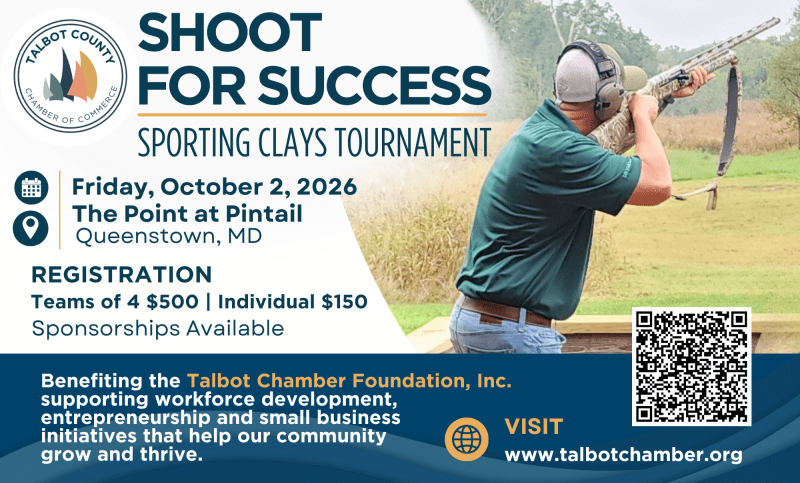
SHOOT FOR SUCCESS - Chamber Sporting Clay Tournament
Join the Talbot County Chamber on Oct. 2, 2026, at The Point at Pintail for annual Shoot for Success Sporting Clays Tournament. Proceeds benefit the Talbot Chamber Foundation, Inc., initiatives that help strengthen the business community and talent pipeline.
Info
SHARE
PRINT